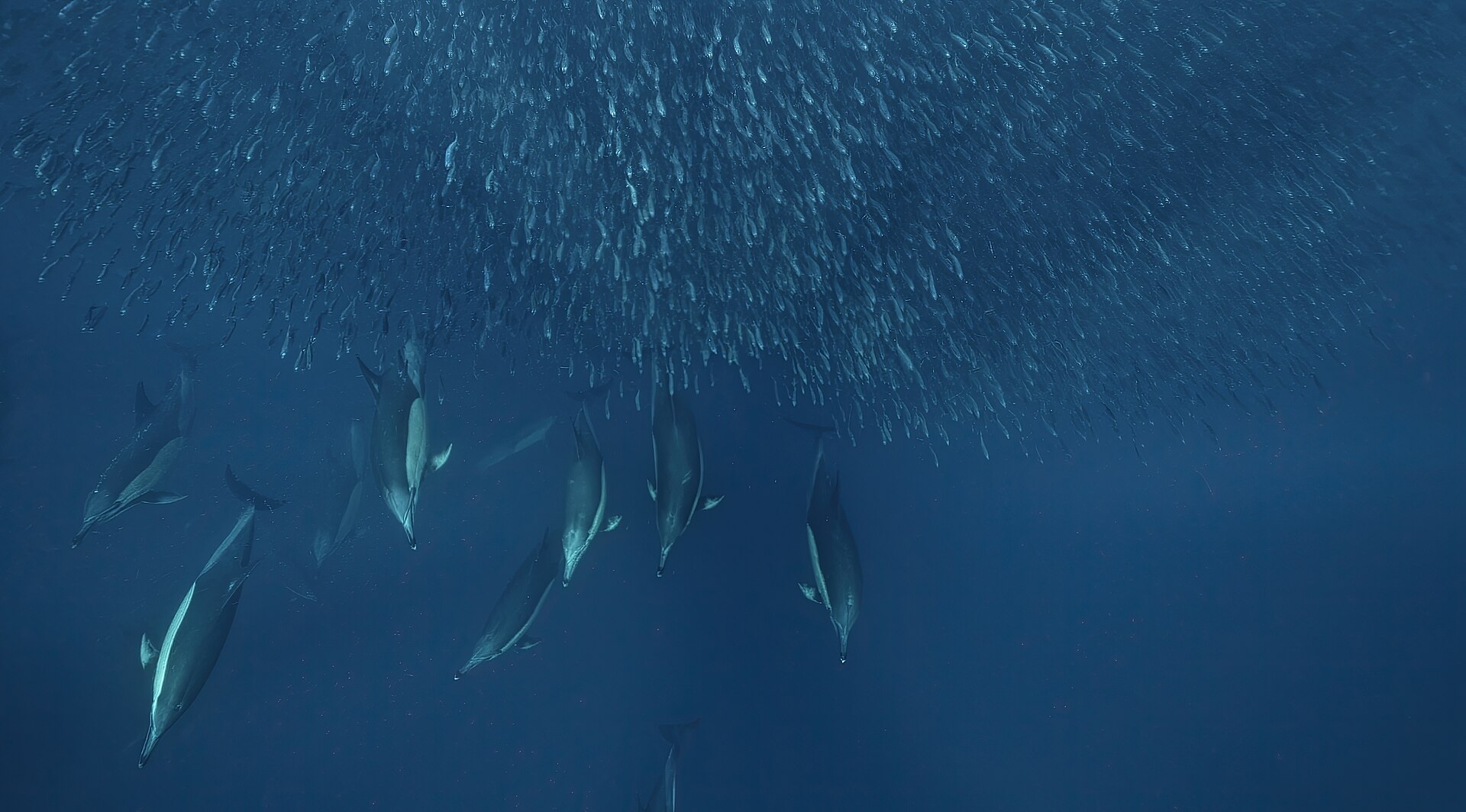
Magdalena Bay (San Carlos / Lopez Mateos), Baja California Sur
Mexican Sardine Run: Magdalena Bay
October–December offshore expeditions in Pacific Baja targeting hunting striped marlin, sea lions, dolphins, and Bryde’s whales on swirling bait balls.
- Season & Peak Window
- October – December
- Peak: Late Oct – Early Dec
- Water Temp & Exposure Gear
- 20–24°C (68–75°F)
- 3mm–5mm full wetsuit
- In-Water / Boat Limit
- Max 5–6 guests per panga
- Fast open-ocean snorkeling & freediving around active bait balls
- Recommended Trip Length
- 4–6 boat days (5–7 nights)
- Typical range: $3,200 – $5,200 / person
- Airport Hub & Routing
- La Paz (LAP), Loreto (LTO), or San José del Cabo (SJD)
- Permit & Booking Lead Time
- Book 4–9 months ahead (prime November slots sell out fast)
High-Energy Open-Ocean Pelagic
Fast Water Entries & Strong Swimming Recommended
The Magdalena Bay bait-ball run takes place 15–35 miles offshore in the open Pacific. Bait balls move quickly; guests should be comfortable rolling in cleanly from a panga, finning briskly in open swell, and maintaining situational awareness when striped marlin and sea lions are actively hunting.
Ocean Conditions & Encounter Overview
Every autumn from October through December, nutrient-rich Pacific currents push massive shoals of Pacific sardines and mackerel along the continental shelf outside Magdalena Bay. Waiting for them are hundreds of striped marlin, California sea lions, common dolphins, dorado, wahoo, and lunge-feeding Bryde's and humpback whales.
Operating out of Puerto San Carlos or Adolfo Lopez Mateos, our small-group pangas (capped at 5–6 guests) cross the mangrove barrier channels at dawn and head 15–35 miles offshore. Captains scan the horizon for diving frigatebirds, boobies, and pelicans—the telltale sign that sea lions and marlin have corralled a bait ball against the surface.
Once a static bait ball is locked in, guests slide in and witness coordinated predation at arm's length: striped marlin lighting up in electric neon-blue bars as they slash through the silver sphere while sea lions dart underneath and Bryde's whales occasionally rise from the deep to engulf the entire school.
Daily Expedition Rhythm & Structure
06:30 Offshore Run Through Magdalena Bay Boca
Depart Puerto San Carlos or Lopez Mateos at sunrise, running out past Magdalena Island into deep Pacific waters where offshore banks concentrate bait.
Bird-Work Tracking & Static Bait Ball Drops
Captains read diving brown pelicans and frigatebirds to locate stationary bait balls. Small groups drop cleanly upwind so they drift effortlessly into the action.
Multi-Species Predator Encounters
On peak days, a single bait ball can hold 20–50 hunting striped marlin, dozens of sea lions, and opportunistic Bryde’s or humpback whales.
5-Day Offshore Structure
Five consecutive boat days smooth out Pacific swell variations and give underwater photographers time to dial in shutter speeds (1/500s+) for high-speed marlin passes.
Ethical Wildlife Protocol
- Small-group caps (5–6 guests per panga) and coordinated radio etiquette to avoid crowding a single bait ball.
- Never use chum or artificial baiting—100% natural, wild ocean predation.
- Maintain a safe perimeter around lunge-feeding Bryde’s and humpback whales; follow guide hand signals immediately.
- Avoid chasing moving bait balls with engines; approach quietly from the side and cut motors early.
- Local Puerto San Carlos / Lopez Mateos captains and marine guides employed on every trip.
Essential Gear Checklist
- 3mm full wetsuit (Oct–Nov) or 5mm full wetsuit (late Nov–Dec as water cools to 20°C)
- Long freediving fins (crucial for keeping up with moving bait balls in Pacific swell)
- Low-volume mask, snorkel, and weight belt (if freediving)
- Waterproof boat jacket for chilly morning 30-mile panga runs
- Wide-angle lens + fast shutter capability (1/500s–1/1000s) for slashing marlin
Mexican Sardine Run FAQs
Is it safe to swim with hunting striped marlin?
Yes, when guided properly. Striped marlin have extraordinary visual acuity and target small sardines and mackerel, not humans. Your guide positions the group on the edge of the bait ball—never directly inside the dense fish sphere—so marlin have clear lanes to slash and peel away.
When is the peak window for the Mexican Sardine Run?
Late October through early December is historically the most consistent window for large static bait balls and high striped marlin density. Mid-October sees warmer water (24°C), while late November and December bring cooler water (20–21°C) and more humpback whale activity.
How physically demanding is Magdalena Bay marlin snorkeling?
It is one of the more active ocean expeditions on our roster. Expect 7–8 hours on an open panga, offshore Pacific swell, and repeated 10–30 minute swims with brisk finning. Strong swimming fitness and open-water confidence are essential.
How does the Mexican Sardine Run compare to South Africa’s Sardine Run?
Magdalena Bay generally offers warmer water (20–24°C vs. 16–19°C), cleaner blue visibility, calmer launches from a protected bay, and far higher striped marlin counts—making it one of the most reliable bait-ball photography destinations in the world.
How do I get to Magdalena Bay?
Fly into La Paz (LAP), Loreto (LTO), or San José del Cabo (SJD). Road transfer to Puerto San Carlos or Lopez Mateos takes ~3 hours from La Paz, ~2.5 hours from Loreto, or ~5 hours from Cabo.
Direct Local Operator Matching
Plan Your Mexican Sardine Run Expedition
Tell us your preferred October – December dates and group size. We connect you directly with our vetted Mexico expedition lead.
Compare or Combine
Related Expeditions
Mexico
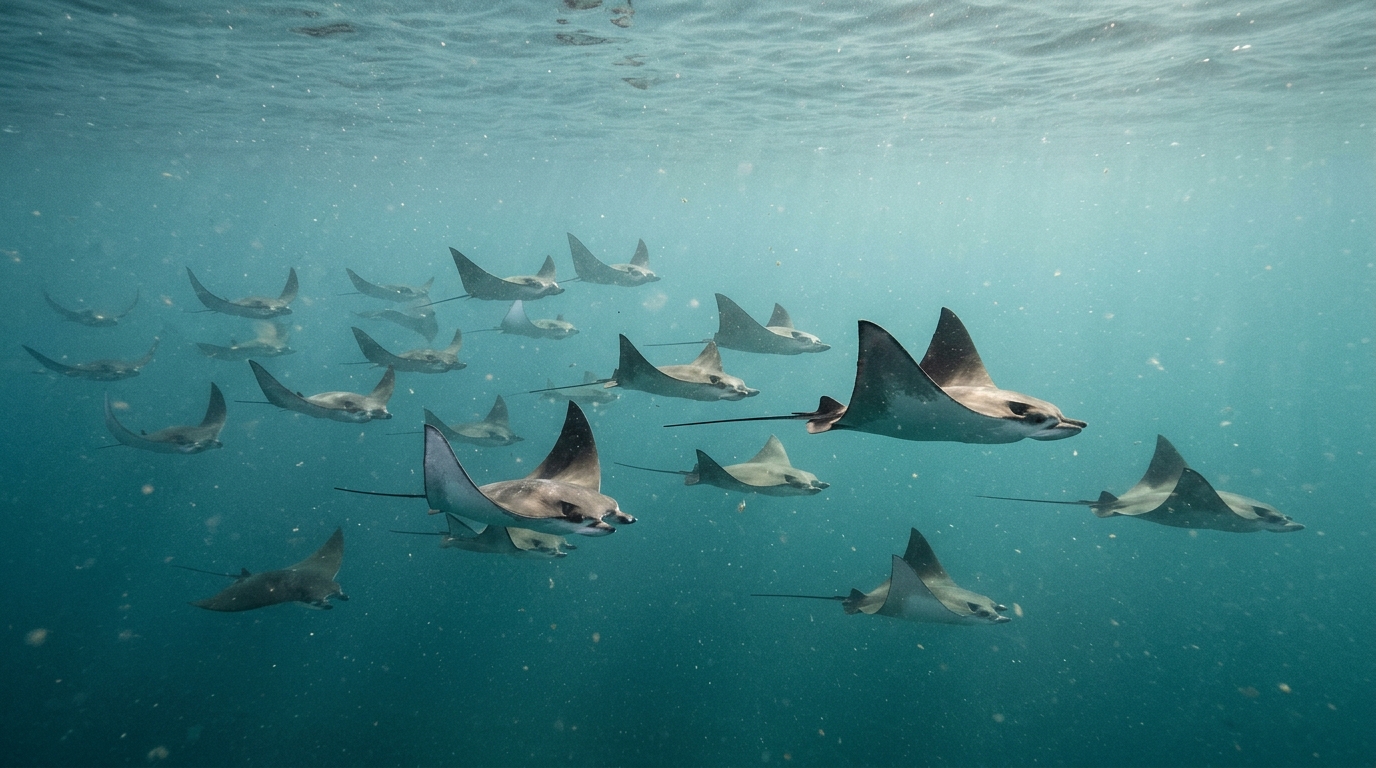
21–28°CMobulas, Orcas & Pelagics
Sea of Cortez Safari
Unscripted open-ocean safaris across Baja’s eastern coast—schooling mobula rays, playful sea lions, transient orcas, and fin/blue/sperm whales.
- Peak Season
- Peak: May – Jul (mobulas & orcas)
- Water Temperature
- Gear: 3mm (Apr–Jun) / Rashguard–2mm (Jul–Nov)
- Group Limit
- Cap: Max 6 guests per panga
Mexico
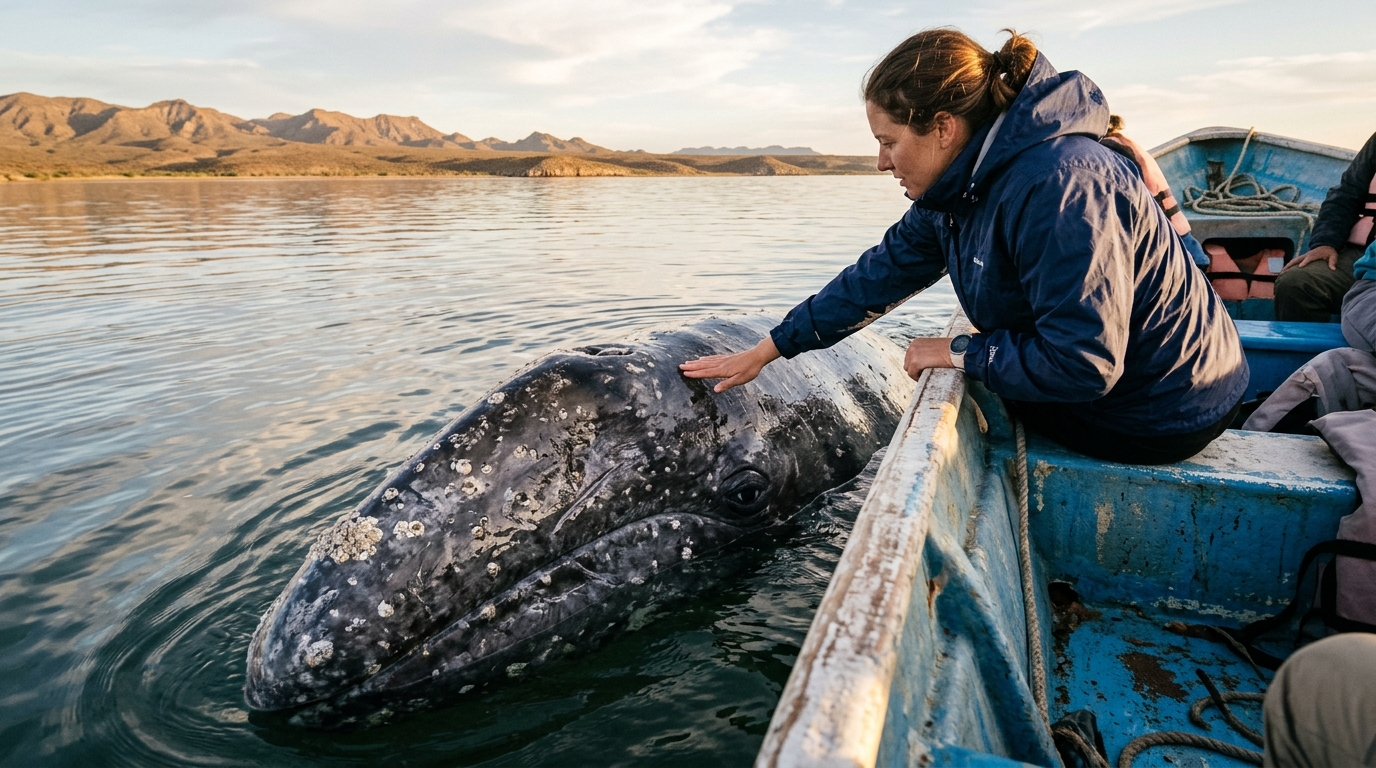
16–19°CGray Whales
Baja Gray Whales
The only place on Earth where curious gray whale mothers and calves voluntarily approach small pangas for whale-initiated boat-side contact.
- Peak Season
- Peak: February – March
- Water Temperature
- Gear: Windproof shell, fleece & spray layers (no wetsuit)
- Group Limit
- Cap: Swimming prohibited by Mexican law (max 6–8 guests per panga)
Mexico
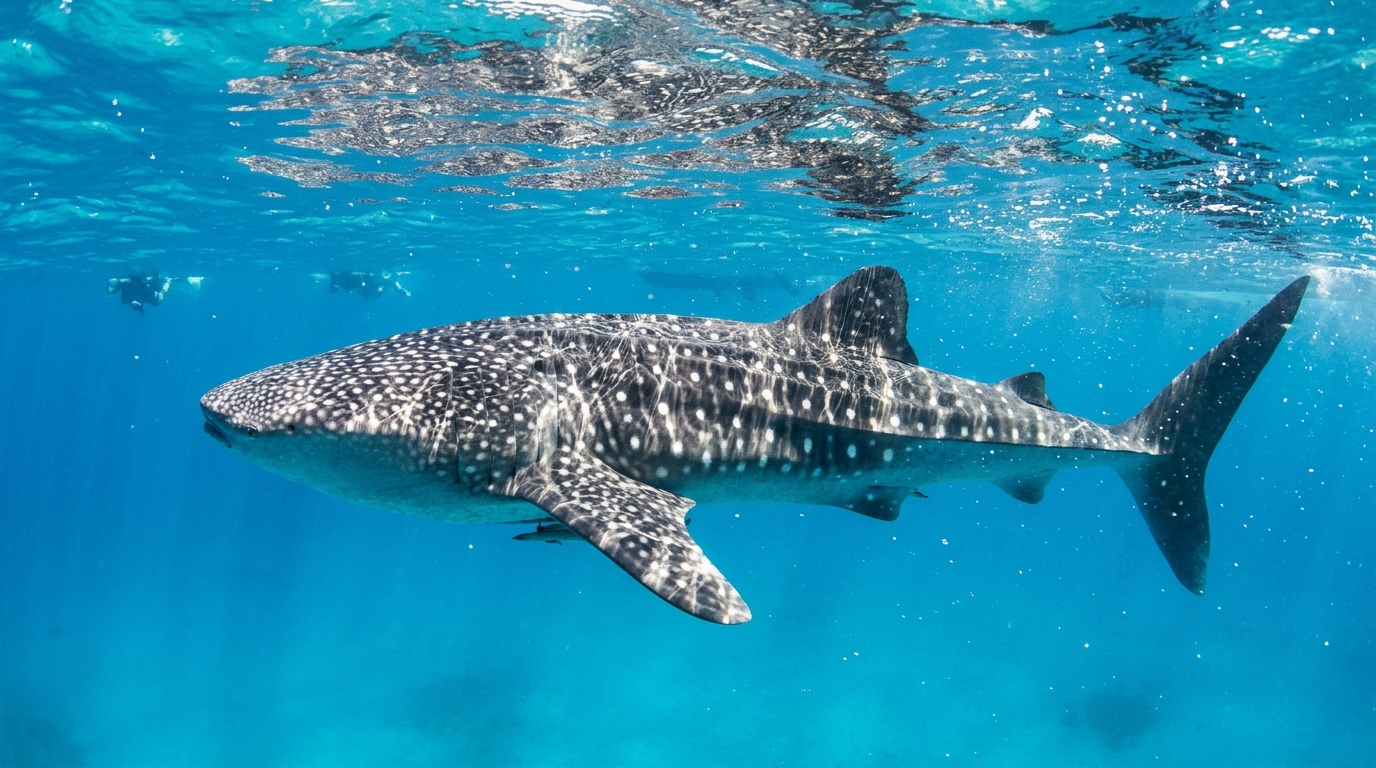
24–26°CWhale Sharks & Sailfish
Yucatan Pelagics
The world’s largest summer whale shark gathering (Jun–Sep) and high-speed winter Atlantic sailfish bait-ball runs (Jan–Mar) off Isla Mujeres.
- Peak Season
- Peak: Feb (Sailfish) / Jul–Aug (Whale Sharks)
- Water Temperature
- Gear: 3mm (Jan–Mar) / Rashguard (Jun–Sep)
- Group Limit
- Cap: 2 swimmers + 1 guide (Whale Sharks) / 4–6 max (Sailfish)